As a Canadian travelling in the UK, it was easy to forget I was in a foreign country. Every so often I was reminded that I was no longer in Nova Scotia - and one of the main reminders was their electrical infrastructure.
In the UK, electricity feels hefty. The power plugs are massive solid objects that clunk satisfyingly into place. They are designed with safety in mind, making it very difficult to accidentally kill someone with electricity. However, I think in a pinch you could probably use the plug itself as a blunt force murder weapon.
Another thing that took some getting used to is that most of the outlets in the UK are switched: every wall socket has some kind of button to push or rocker to flip before it will deliver electricity. Also, many hotel rooms make you put your key card in a slot by the door before any room power works at all. This made my first evening at Heathrow comically confusing, as I needed to figure out a whole new set of user interface affordances just to turn the lights on.
One big advantage of British power is that it has twice the “oomph” of North American power: 230 volts vs 120 volts. This makes kettles boil water and device batteries recharge much more quickly. It also means that a lot of hotels and B&Bs can now offer heat-on-demand showers. Instead of a separate hot water tank somewhere, these showers heat the water on the fly as it travels to the shower head. These are controlled by yet another distinct and at first baffling interface: instead of taps and spigots, there is just a box with a few buttons and maybe if you’re lucky a temperature dial.
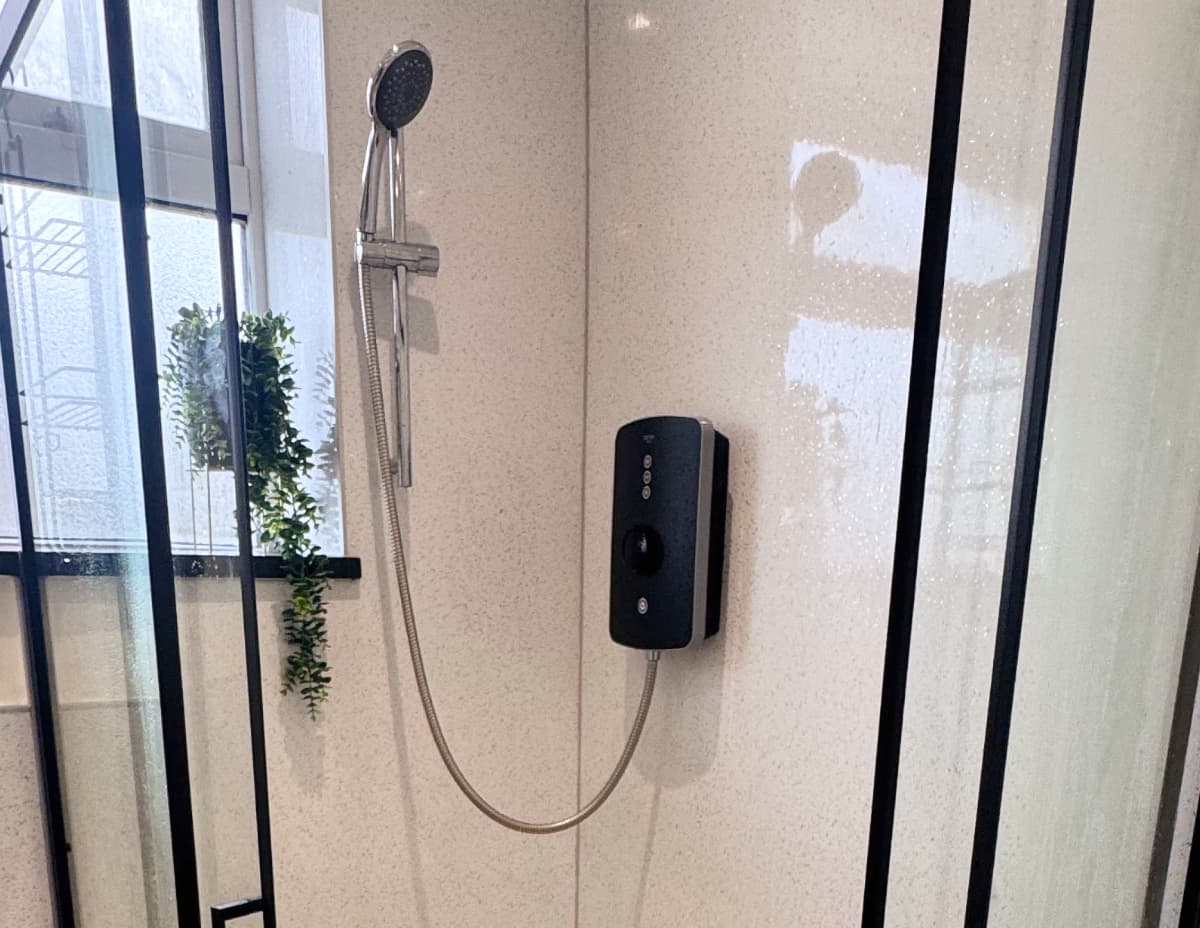
This takes some getting used to, but once you figure it out, you can now take as long a shower as you want, since the hot water supply is literally unlimited.
I was looking forward to one of these endless hot showers after my first day of hiking the cold damp hills of the Peak District. I got into my hotel room’s shower and eagerly pressed the buttons – and nothing happened. No water at all, and certainly not any hot water. There were only a few buttons available and I tried all of them in every possible combination with no result. So I had a disappointed rinse in the sink and went down to tell the front desk that the shower seemed to be broken. I consoled myself with some lunch and then a pint by the fire. Someone eventually came by and told me everything was working fine: “you just have to pull on the mains”. I went back up to the room and discovered that, unlike anywhere I had ever been before, the power for the shower was activated by pulling a string from the ceiling.
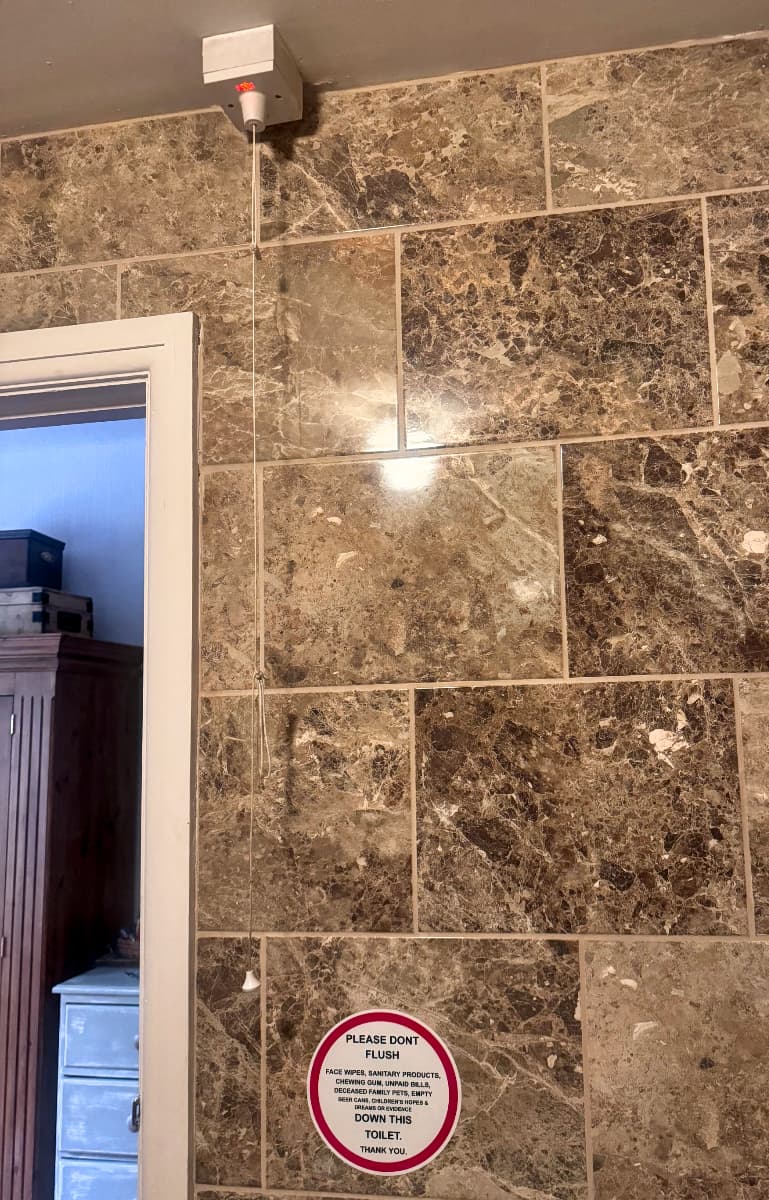
The only other place I’d seen something like this is in senior living places, where strings in the bathroom are attached to alarm systems to alert staff if you’ve fallen and can’t get up. I had seen this string before but, assuming it was an emergency alert system, hadn’t dared to pull it.
Working in software, one of the things I worry about is creating user interfaces that make sense, with consistent and clear elements that behave predictably. Travelling to a different country gives me fresh eyes on how things can be put together. I had never considered a pull string as a main power control, but I guess I do now.
I did, though, enjoy the warning sticker underneath the string:
Please don’t flush face wipes, sanitary products, chewing gum, unpaid bills, deceased family pets, empty beer cans, children’s hopes & dreams or evidence down this toilet. Thank you.
The UI for power may be different in the UK, but at least the sense of humour is the same.