When the folks at Zuppa told me that their next production with the NowHere platform was going to be in Morecambe, I have to admit my first thought was "where? I've never heard of Morecambe."
Living in Halifax Nova Scotia, I'm used to people (often in the western half of the United States) not knowing that my home town or even province exists, so I'm no longer embarrassed if I haven't heard of a place.
Zuppa's "NowHere projects bring together a place's history, geography, and cultural contributors, and I spent a week wandering around the waterfront pavilions, the shops, and the back alleys of the town, testing out the application and then at last experiencing the final production. This gave me an intense if brief snapshot of an interesting place.
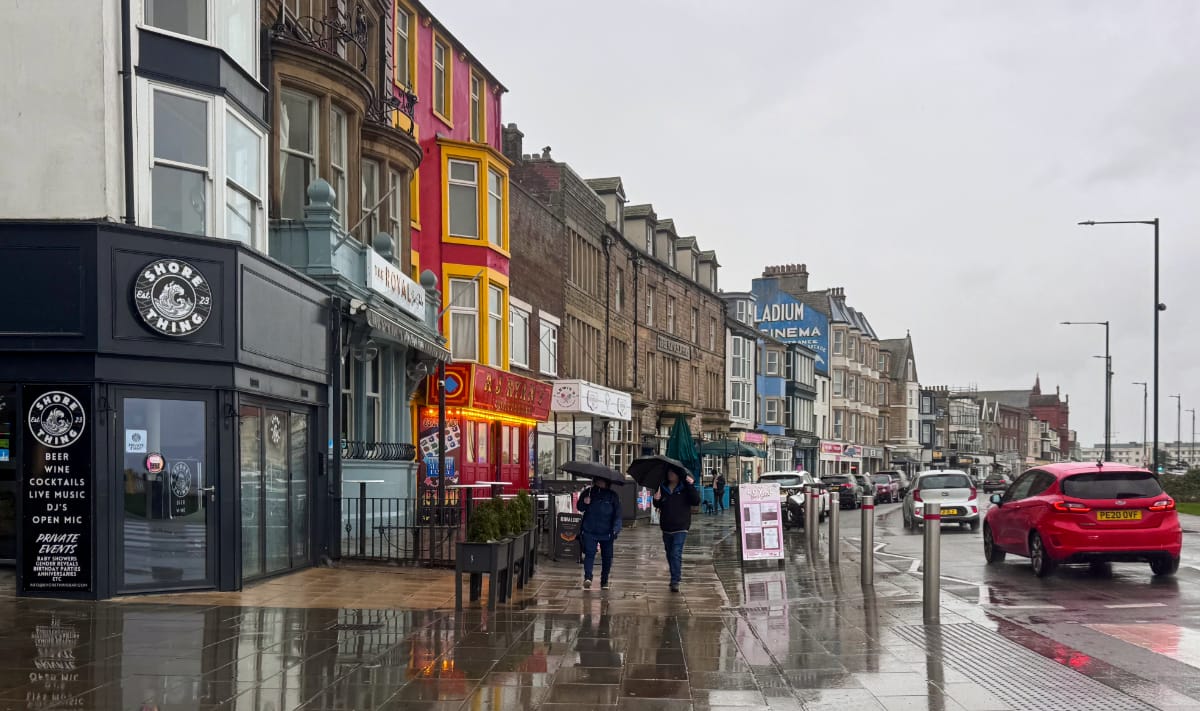
Morecambe is in the north-west of England, on the shores of Morecambe Bay, in the outskirts of the city of Lancaster. If you're not sure where Lancaster is, it's north of Liverpool. (If you're not sure where Liverpool is then you should look up a map yourself).
During Britain's industrial period Morecambe was a big vacation destination for people from the major cities just to the south. It had multiple piers, an amusement park, a long waterfront promenade across from hotels and bars and restaurants, open-air swimming pools, and grand performance venues that hosted all the big acts of the time. It was such a popular destination that the calendar had to be staggered to specific regions at specific times to keep from overcrowding. So there would be Liverpool Week, Manchester Week, Sheffield Week, and so on.
The good times continued until the 1980s, when trouble caught up to Morecambe: Thatcher's reforms wrecked the industrial economy in the north of England, making for fewer people able to visit; and cheap airfare from discount airlines like EasyJet meant that it was just as easy to hop down to warmer, sunnier places like Greece or Ibiza for your partying.
Over the years several of the piers collapsed or burned down, the swimming pool closed, many of the big venues have been shuttered, and the amusement park is now a boarded up empty lot, after a brief attempt to revive it ended in a scandal with the oh-so-British name of "Blobbygate". So Morecambe is on its back foot these days. Late October may not be the most ideal time of year to be visiting either.
But besides all that, I had a great time there. First things first, the shoreline and the view of Morecambe Bay never failed to impress.
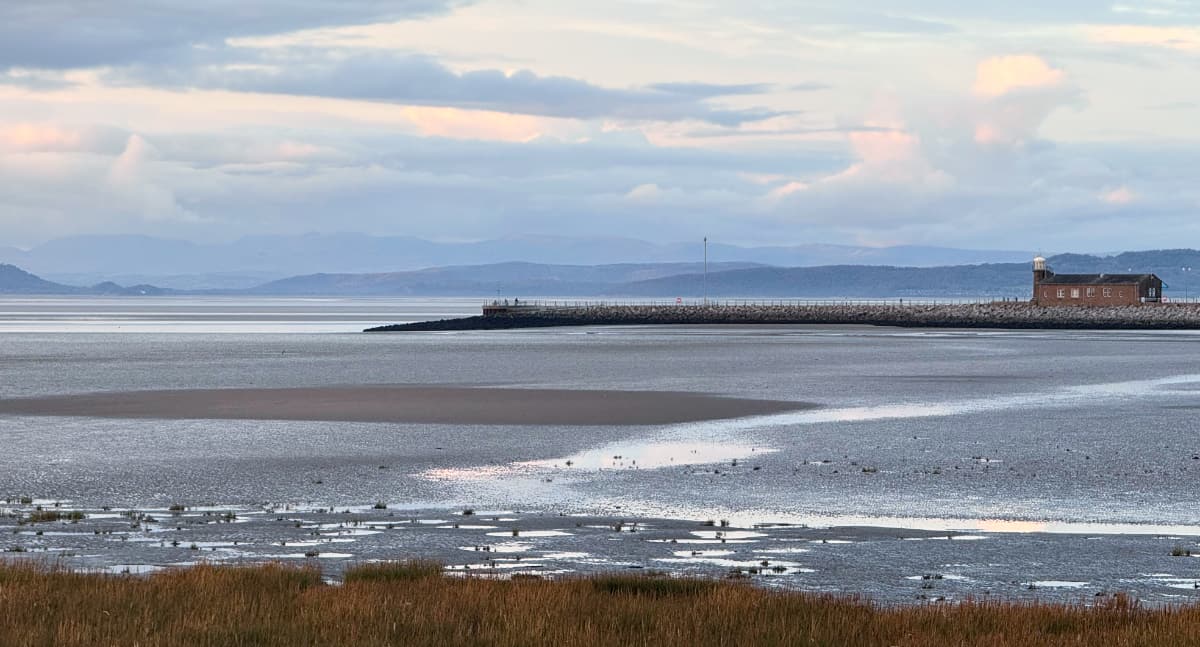
Photos can't properly show the broad sweep of the views from the shoreline.
At low tide, the sands go for hundreds of meters. At other times the water has many different moods and currents, all under an ever-changing sky and backed by the spectacular hills of the Lake District.
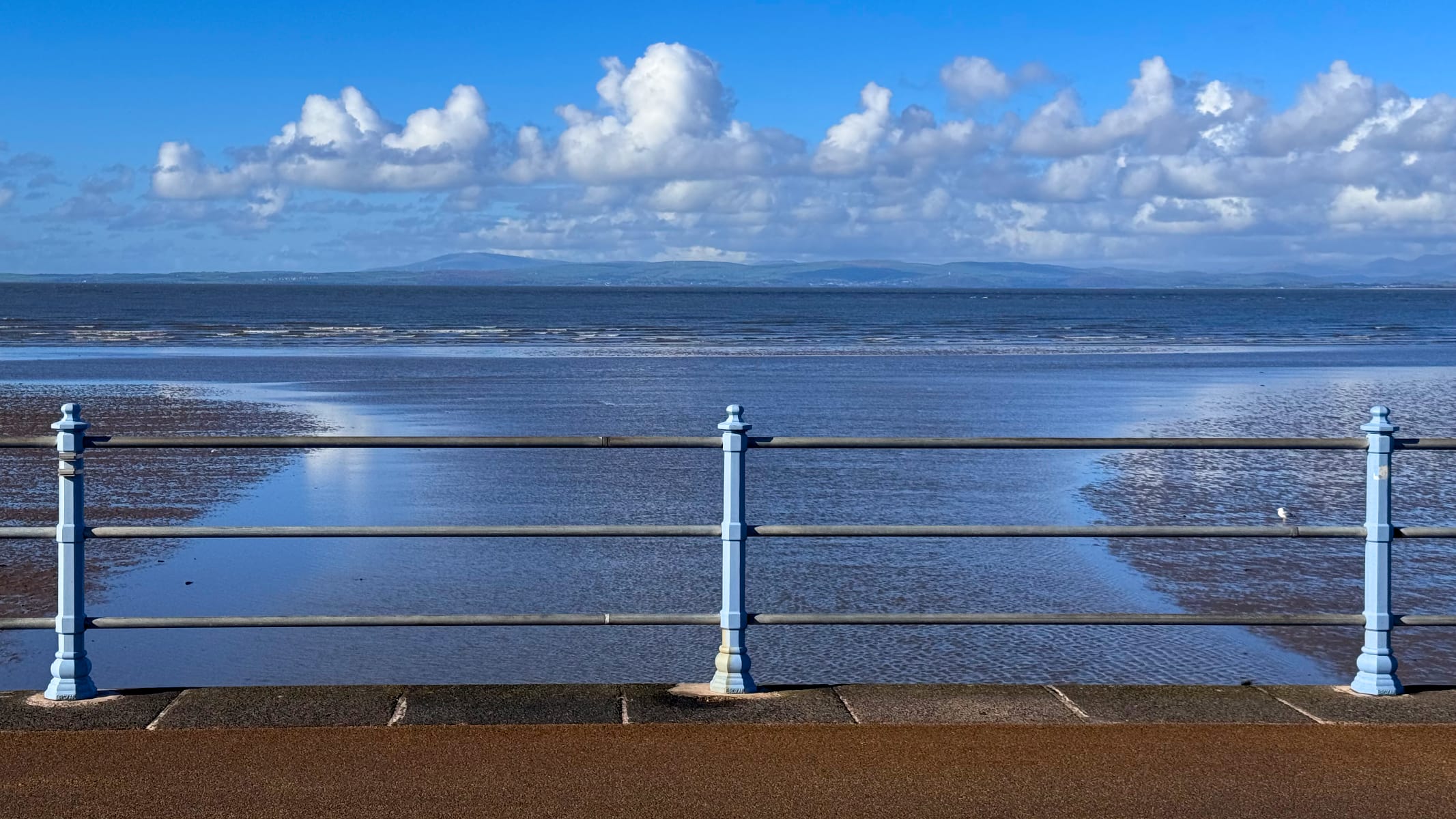
I gather the weather had been damp and foggy before I arrived, but Morecambe welcomed me on my first evening there with a stunning sunset.
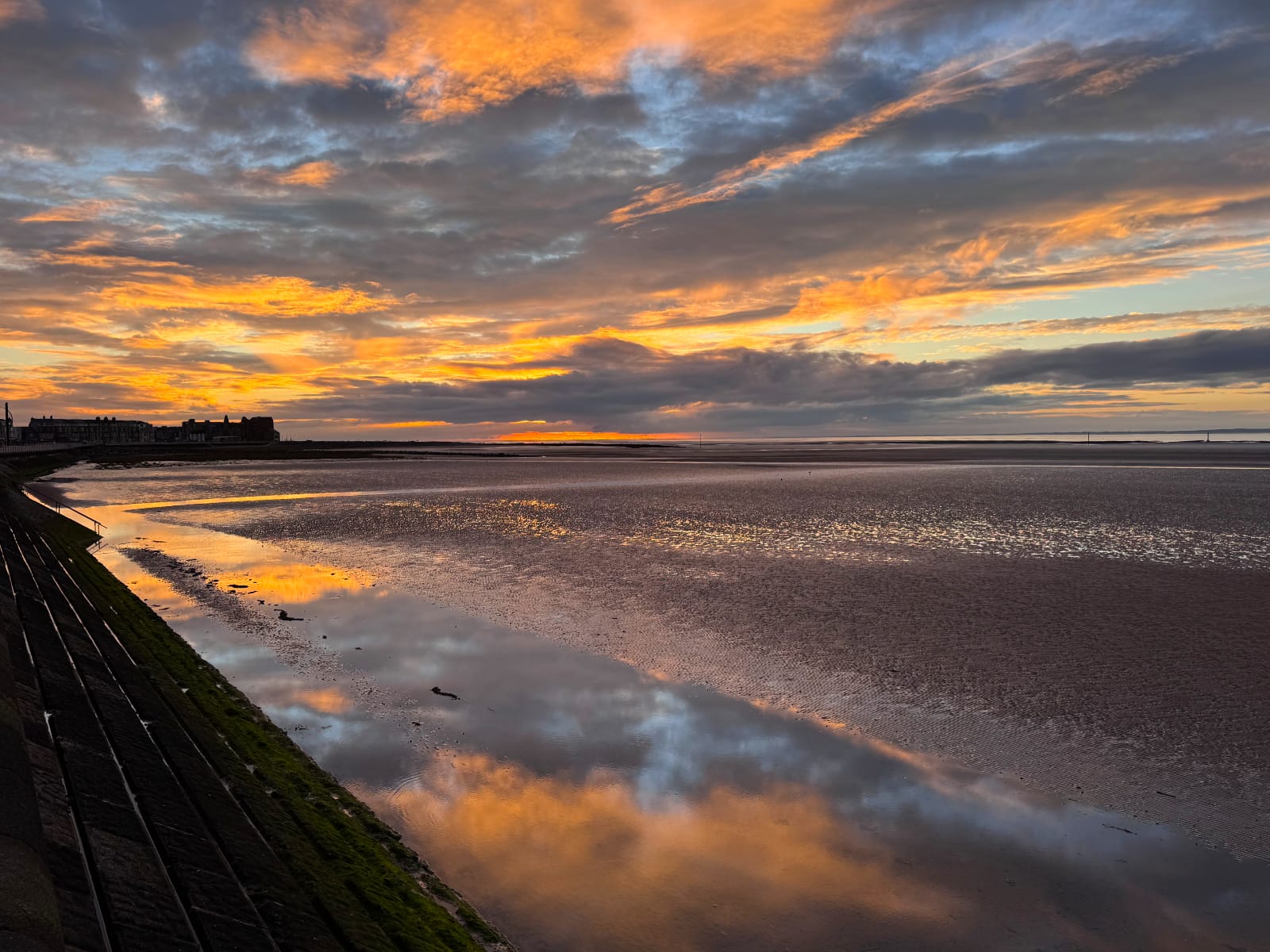
It was clear enough that I could even see a huge wind farm out to sea.
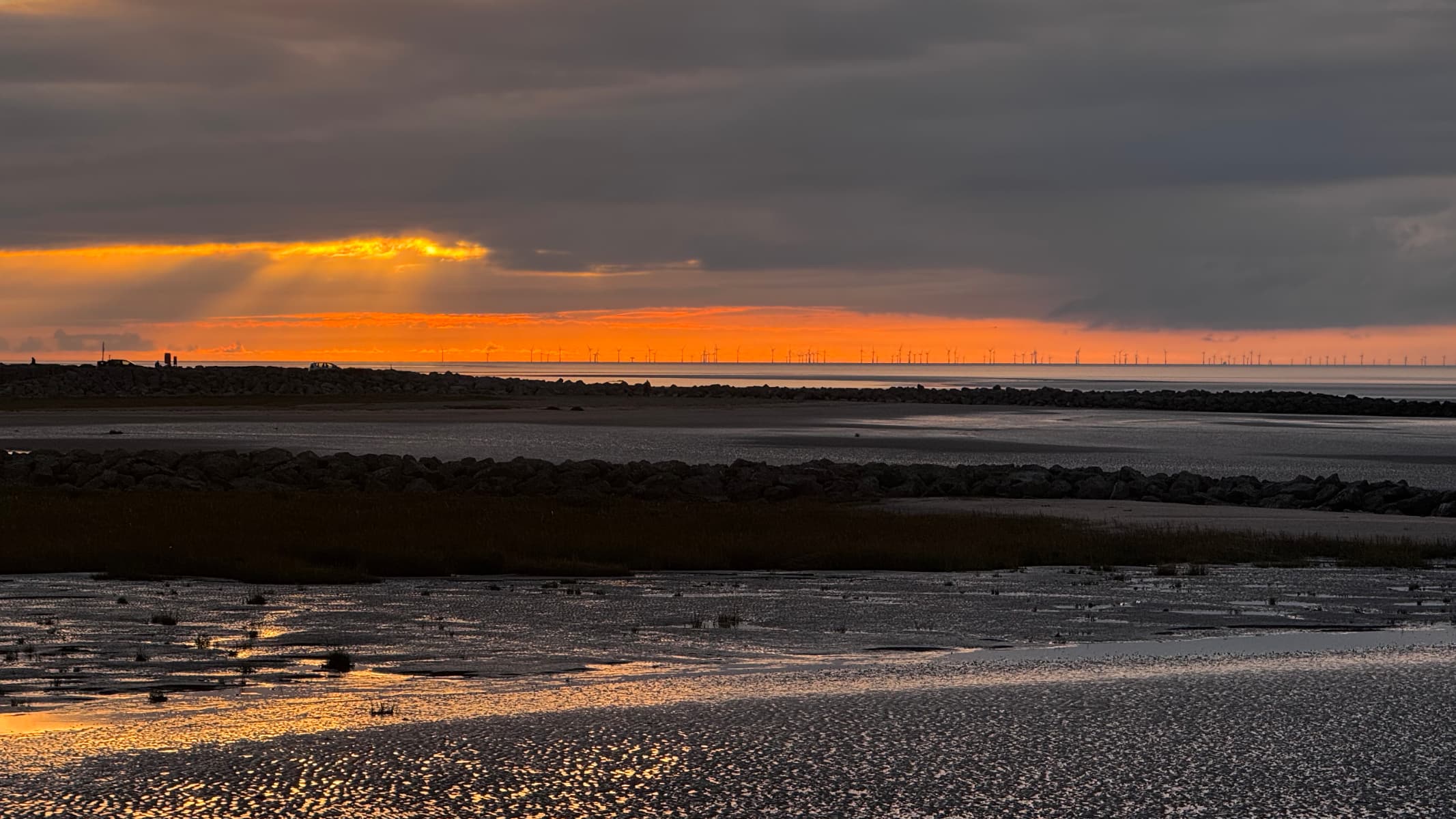
ENHANCE!
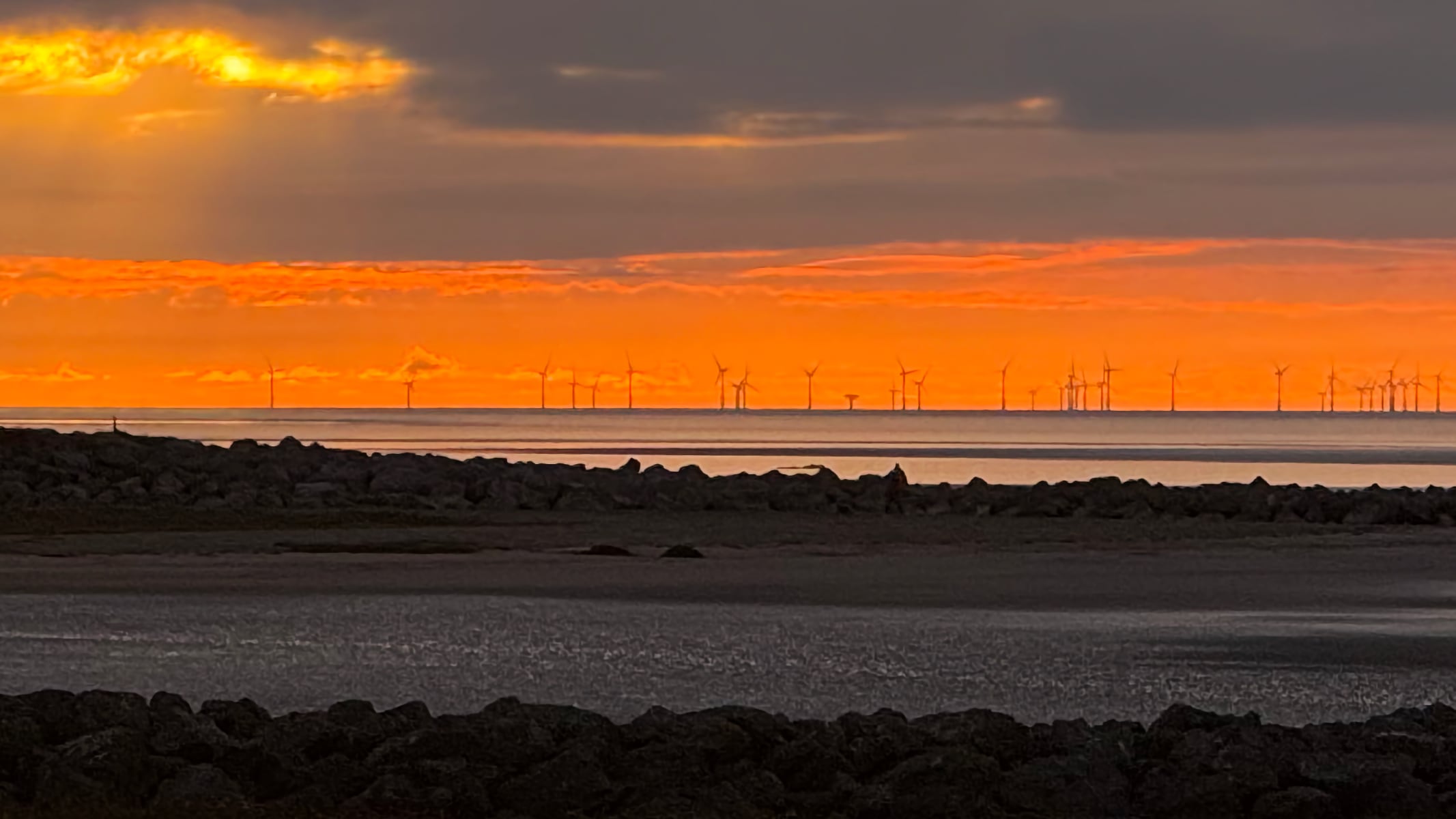
I never grew bored of the view of the bay while I was in town.
Morecambe's economy isn't doing very well. That said, after a week in London it was refreshing to see houses and storefronts that were within the financial reach of normal people rather than only oligarchs and big corporations. This meant that there were still spaces for quirky projects and strange shops. Do you want to sell just plastic dolls and/or old model kits? Do you want to set up a pub right next to half a dozen other pubs? Or keep a safe-house for immigrants and refugees? Are you a maverick chef who wants to run your own two-person gourmet restaurant where nobody can tell you what to do? How about a grocery shop that only sells Polish stuff? Or an art gallery / performance space with no signage that even locals don't know about? Then Morecambe might be the place for you.
One thing that took some getting used to for me is that the buildings in Morecambe are made of stone. Where I've lived everything is either made of or finished with brick (Toronto) or wood and siding (Nova Scotia) and only fancy and expensive buildings have stone. This made it hard for me to tell what kind of part of town I was in, as it all looked "fancy" to me. Stone buildings don't wear down in the same way as siding or brick, and often end up looking more charming as they sag a bit.
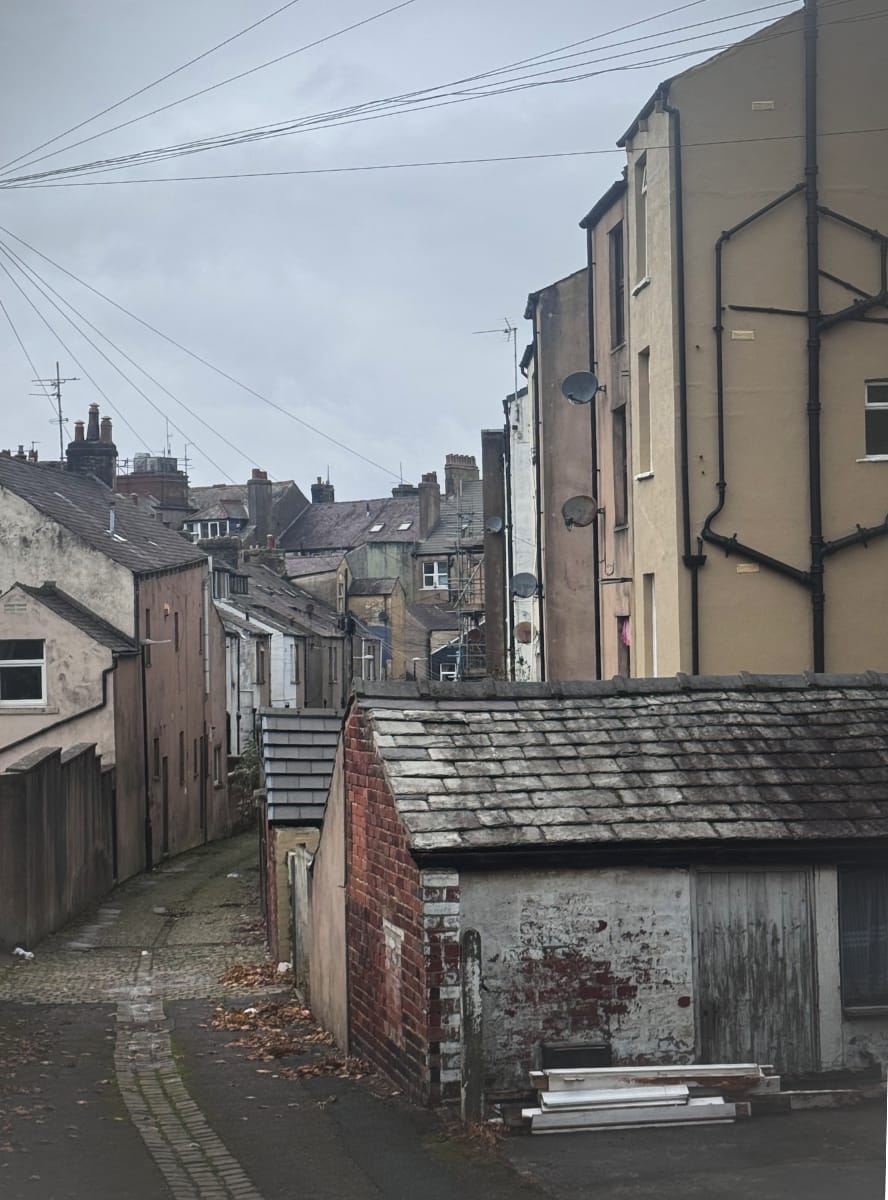
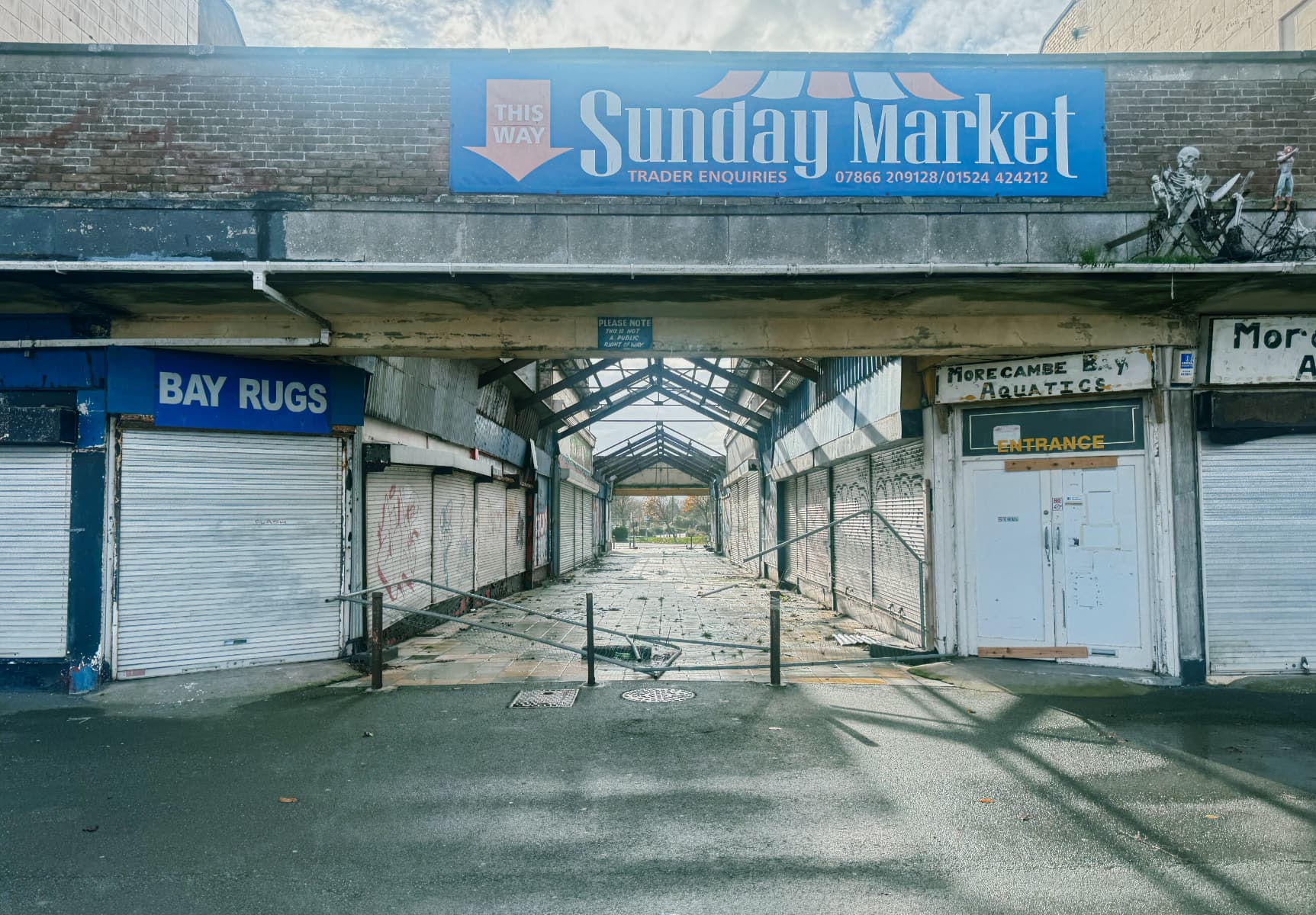
Not all of it looks charming though: some parts of town did feel like something from a zombie movie (although maybe that's just during the off-season).
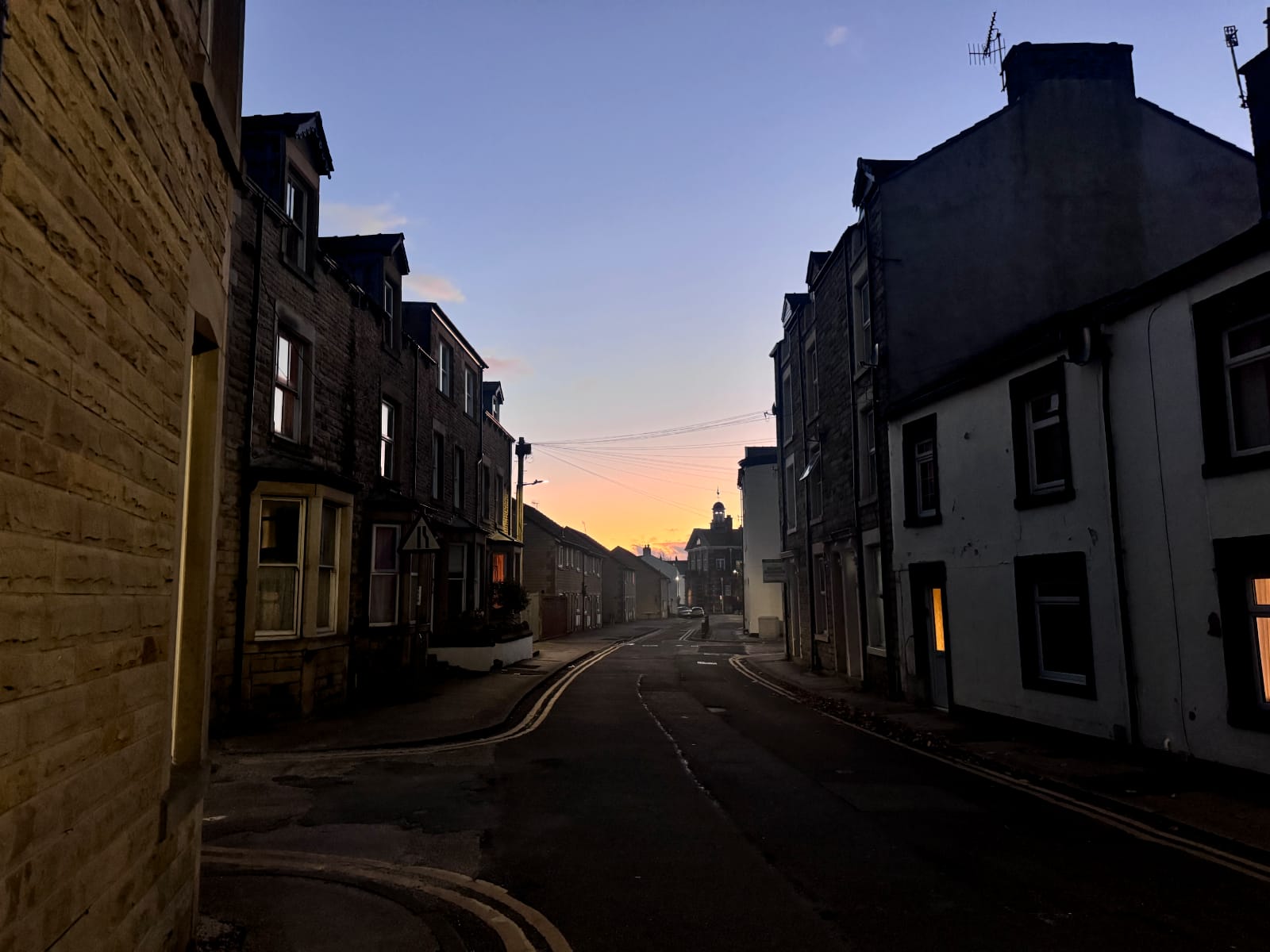
The original settlement here was called Poulton, and it's been around long enough to be mentioned in the Domesday Book of 1086. That area still feels a little medieval and I had a lovely walk through its narrow streets in the evening after the show finished.
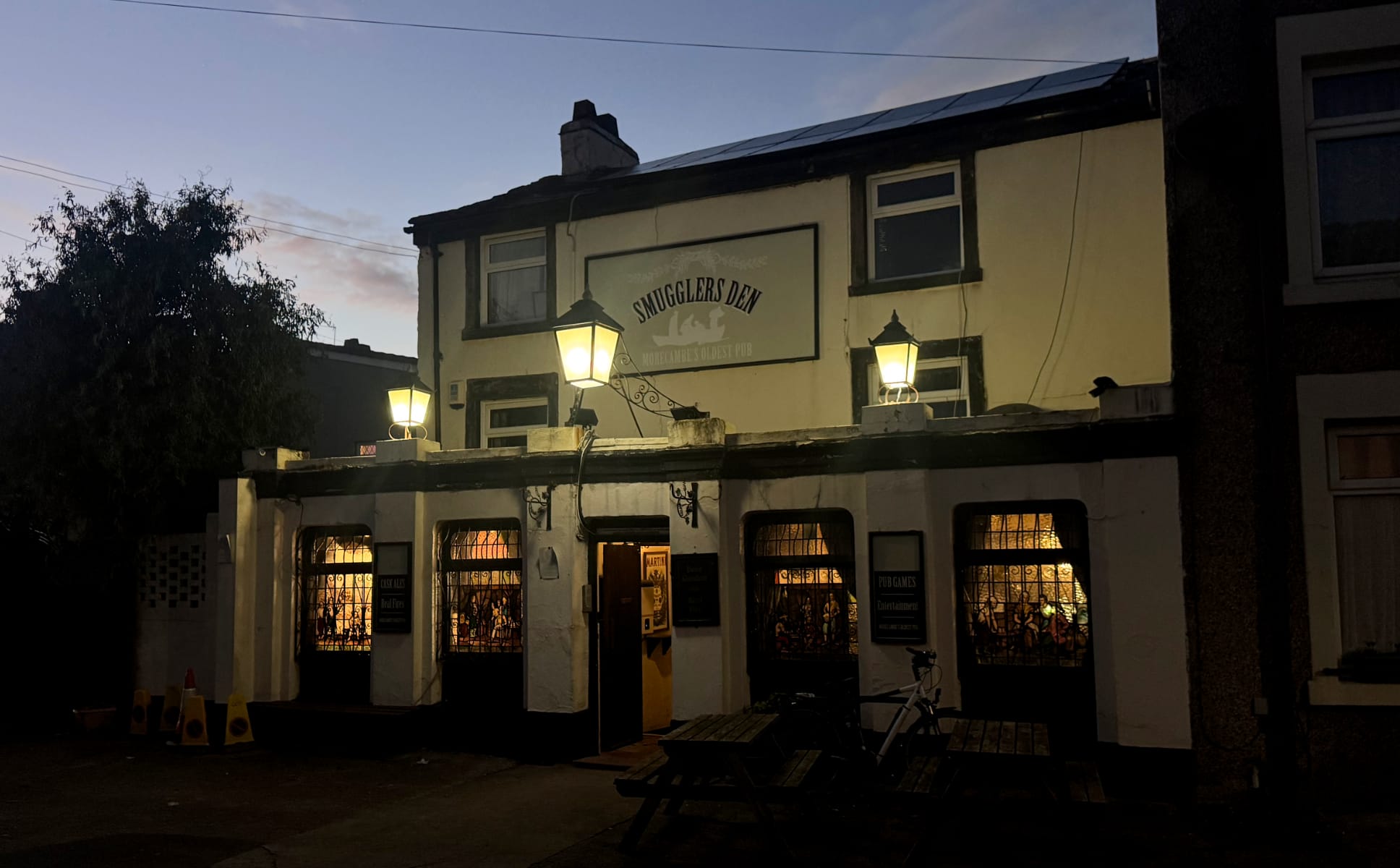
We ended up celebrating at "The Smuggler's Den", the oldest pub in town (from 1640!). I kept expecting hobbits to come through the door.
The NowHere shows amplify the echoes of other times in a place. It wasn't too hard to imagine Morecambe back in its crowded glory days, and maybe what it might become in the future.
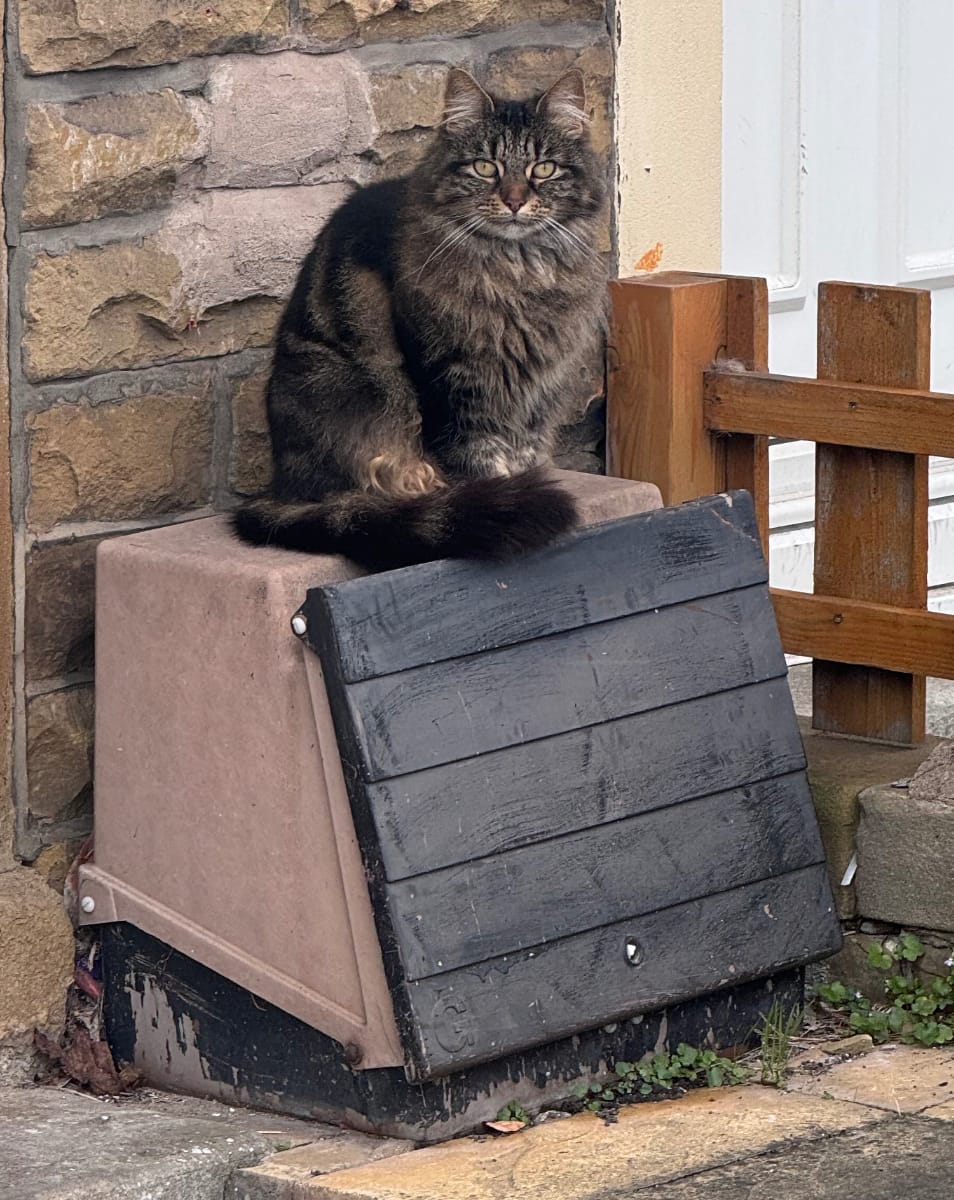
But who needs to reflect on the past or the future when the present has, for example, this excellent cat that I met: