I had booked several days in London, my first time there in over a decade. Plans with friends were a bit up in the air, and I also had some work to do, so I kept things low-key and unstructured by doing my favourite thing whenever I'm in a big city: I walk.
I used to consider London as a collection of tube stations with neighbourhoods around them, but this time I connected between them on foot - luckily the weather cooperated!
I'll go into detail about some of my journeys in follow-up posts, but I want to note one of the things that really stuck out to me:
There's so little car traffic in the heart of London.
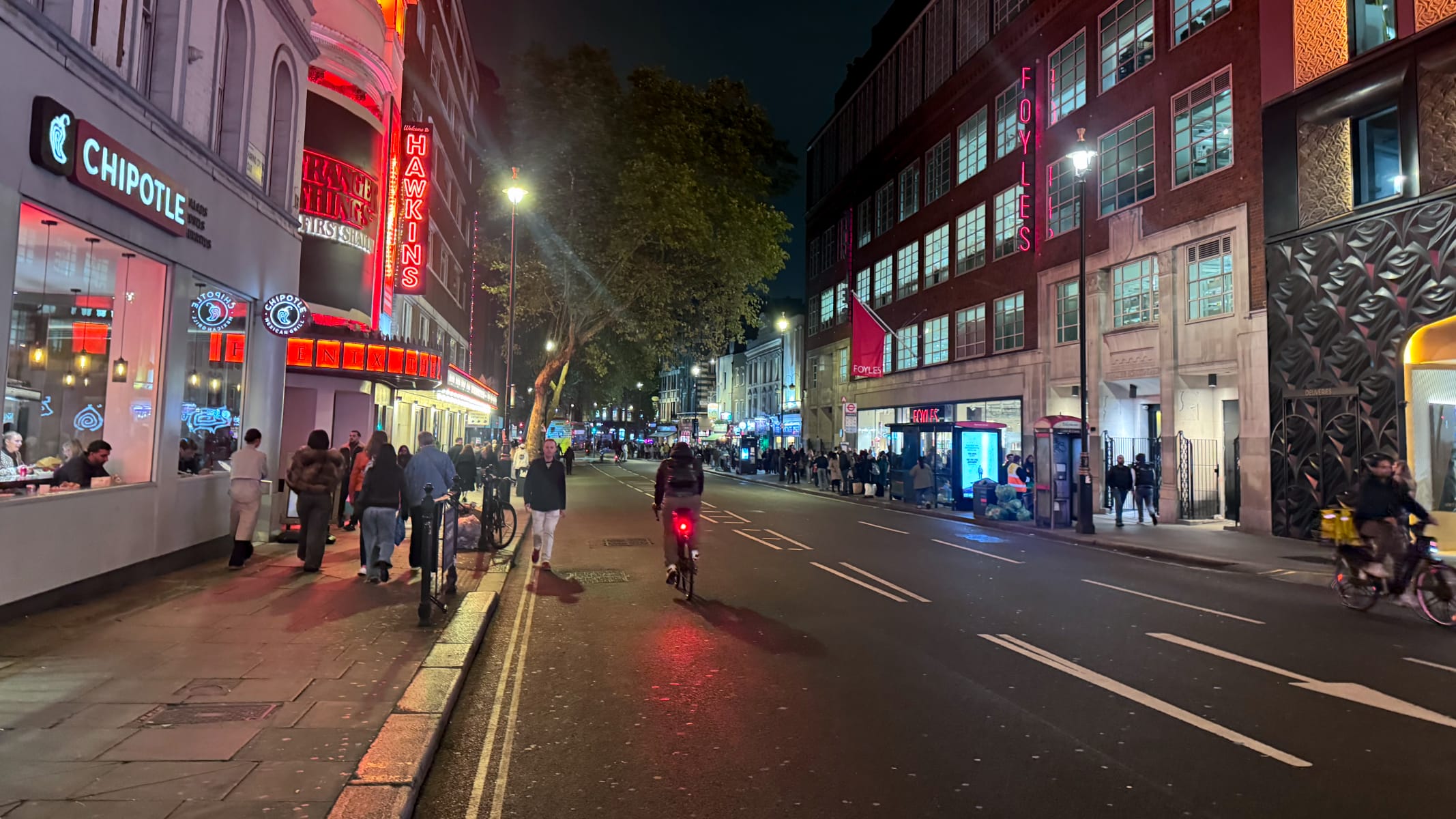
I was staying just off Tottenham Court Road, which turns into Charing Cross a few blocks to the south, and is one of the main arteries in the music and theatre district. As I wandered about getting familiar with the neighbourhood, I noticed that while the sidewalks were packed with people, the multi-lane road only seemed to have buses, taxis, and food delivery bikes. Here's what it looked like on a Friday night:
Earlier that day, around noon, I had been down in the City of London, and the financial heart of the United Kingdom had ... one double-decker bus and a few rideshare bikes.

A few days later I walked down the Strand, famous for centuries for being London's main drag:
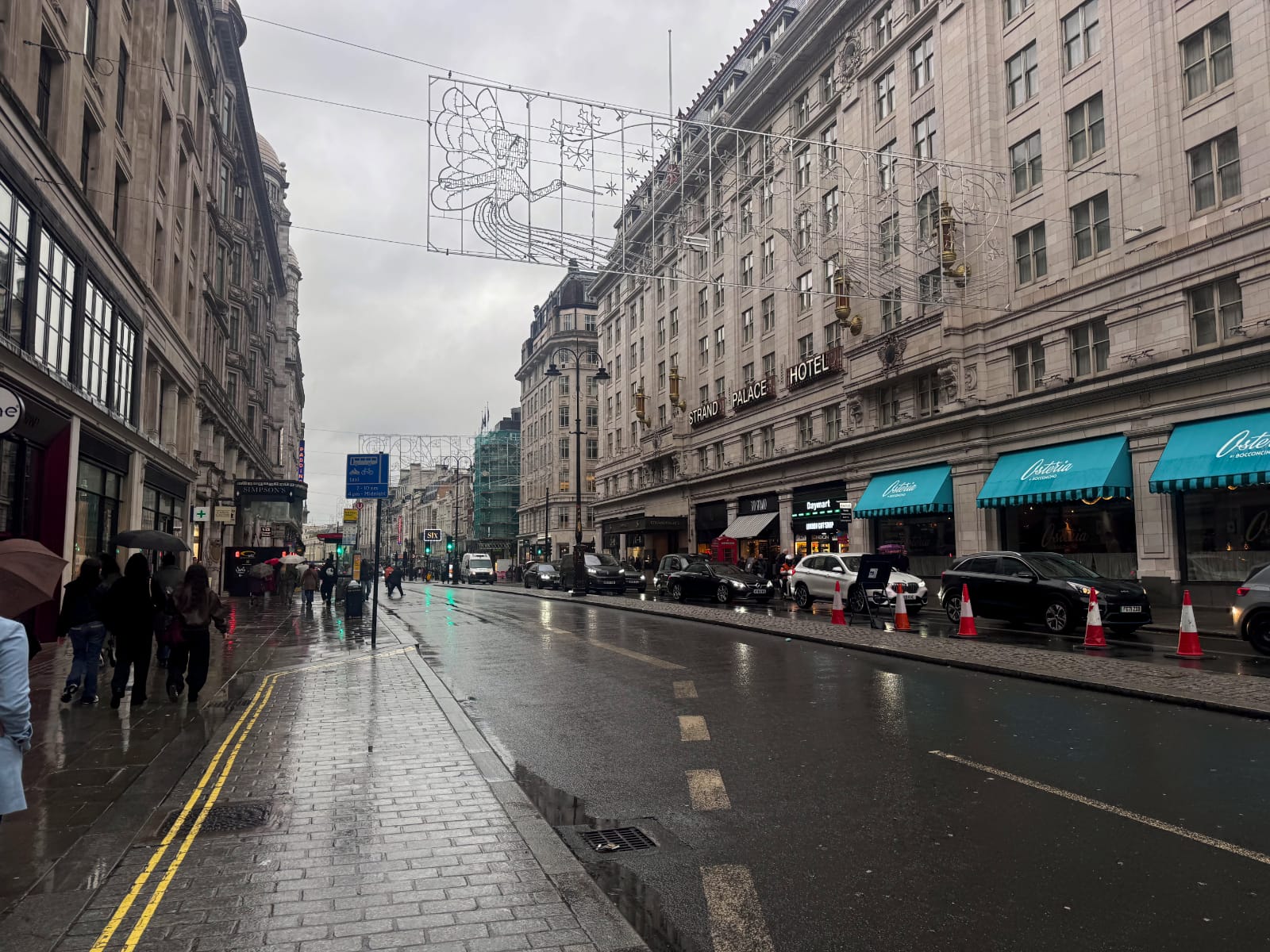
Admittedly there were some cars here, but they were all stopped outside a hotel. Very little traffic was actually driving by.
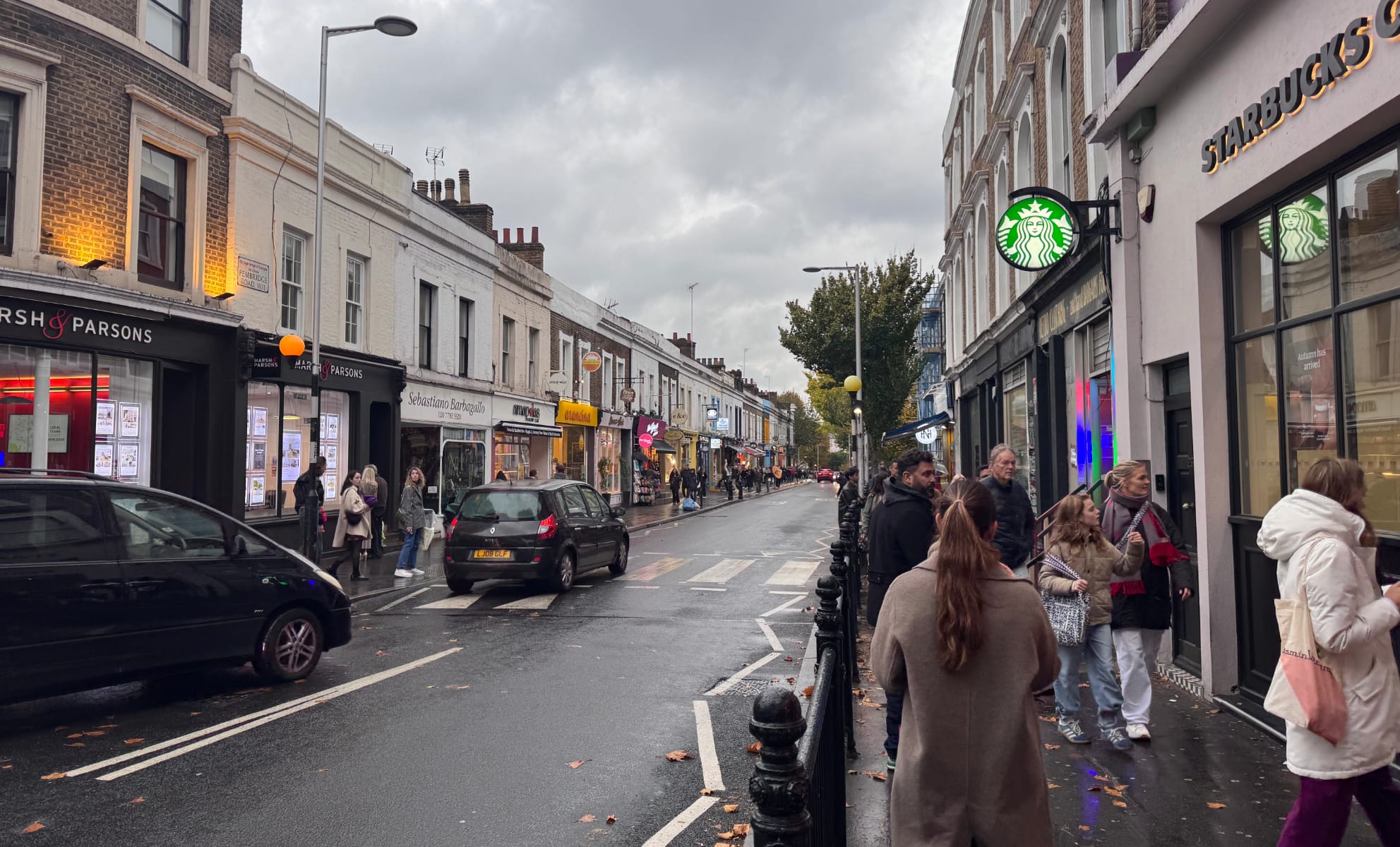
Even in Notting Hill, you could barely squeeze by on the bollard-guarded sidewalks, but the streets were mostly empty.
For most of my life the key terms I would have used to describe the heart of London would have been "bustling" and "clogged with traffic" but in 2025 this was very much not the case. To be honest, it felt a little uncanny at first. It felt like there was something slightly wrong, as if the streets were empty for some ominous reason. I guess part of me had been expecting a post-Brexit dystopian London more like Children of Men but instead the empty boulevards kind of felt like 28 Days Later.
But once I got used to it, it didn't feel dystopian at all - quite the opposite in fact. It was freeing to not have to dodge traffic and breathe fumes all the time.
This seems to have mostly due to London's congestion pricing. Not only that, but further research showed that Tottenham Court Road had even more strict traffic bans than other parts of downtown.
London has joined other big global cities like Paris and New York by strictly limiting the amount of car traffic that can go into the city core. This has made the air cleaner, the roads quieter and safer, and has improved travel times for the vehicles that do come downtown. It helps that all of these cities have excellent and thorough transit systems - something I think Halifax, walkable though the peninsula is, might need to work on if it ever wanted to try something similar.
Squeezing through crowded sidewalks right next to the nearly empty roads did make me wonder about how much space we waste with our car-centric assumptions. I think it's only a matter of time before they start widening the sidewalks and narrowing the roadways to better support the real users of these streets.
When I headed to Euston Station on my way out of town, I found myself outside of the congestion pricing zone for the first time, and I was back in the classic heavy London traffic I had been expecting. I can't say that I missed it!